
CIOReview Europe Weekly Brief
Be first to read the latest tech news, Industry Leader's Insights, and CIO interviews of medium and large enterprises exclusively from CIOReview Europe
A featured contribution from Leadership Perspectives: a curated forum reserved for leaders nominated by our subscribers and vetted by the CIOReview Advisory Board.

Volvo Group
Leading at the Crossroads of IoT and Engineering
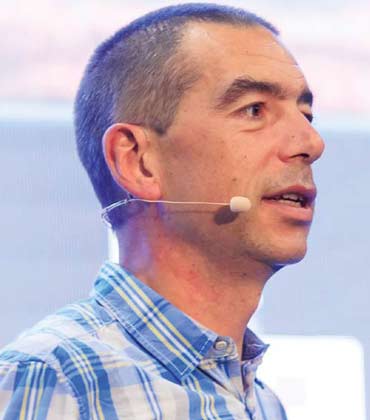
Julien Bertolini
Leading IoT initiatives at a global industrial player like Volvo Group has been a continuous exercise in balancing innovation with governance. In environments where operational stability, cybersecurity and long-term IT alignment are non-negotiable, digital transformation cannot be approached with a pure startup mentality.
Over the years, I’ve learned that success hinges on maintaining agility while respecting industrial constraints. We follow an iterative approach: launching Minimum Viable Products (MVPs) under controlled IT exemptions lets us experiment, learn and deliver early value. As solutions mature, we gradually fold in enterprise architecture standards and cybersecurity requirements. These technologies allow us to innovate without compromising the robustness that industrial operations demand.
Breaking Down Silos: The Challenge of IT-OT Collaboration
One of the most persistent challenges in industrial IoT (IIoT) is fostering collaboration between business units, operational technology (OT) and information technology (IT) teams. Traditionally, these functions have worked in silos, with different priorities and vocabularies. Yet, successful IIoT projects require a seamless blend of these worlds.
We address this by staying close to operations. My team regularly conducts Gemba walks, visiting shop floors to engage directly with frontline workers and understand their real-world challenges. This on-the-ground insight ensures that our digital initiatives are grounded in operational realities, not just technical possibilities.
To further break down silos, we established the Volvo IoT Community—a cross-functional network of over 200 engaged members from across departments. It’s a platform where ideas, use cases and lessons learned are openly shared. Every new IoT initiative is also formally sponsored by a business stakeholder, ensuring strategic alignment and long-term adoption.
Leading Through Change: Transparency, Curiosity and Shared Purpose
In times of fast-paced technological change, transparency is a leader’s best tool. It’s not enough to tell teams what to do—they need to understand why change is happening. At Volvo Digital Technology, we foster this by encouraging open dialogue and nurturing an entrepreneurial mindset.
“Breaking down silos starts on the shop floor by engaging directly with frontline workers”
We empower our engineers to engage directly with business partners, experiment with new solutions and share insights openly within the team. Regular debrief sessions—where we reflect on innovations, failures and learnings—have become part of our culture. These practices help maintain curiosity, build alignment and ensure that we remain agile in the face of rapid change.
Bridging the Gap between Business Needs and Technical Solutions
One of my key responsibilities is ensuring that our technical solutions stay relevant to business needs. Clear communication is critical here. We work with business units to understand their functional goals and then translate these into scalable, future-proof technical solutions aligned with enterprise strategy.
Our communication style adapts to each stakeholder’s technical fluency. Rather than leading with the complexity of IoT platforms or AI models, we emphasize the value delivered— whether it’s improved quality, better traceability, or enhanced operational efficiency.
Relationships matter, too. Regular check-ins with stakeholders build trust and mutual understanding. Given our IoT team’s limited capacity, we also facilitate prioritization workshops with business sponsors, ensuring we focus on initiatives with the highest strategic impact.
The Future of Industrial IoT: Edge AI and Smart Asset Tracking
Two emerging IoT trends are fascinating for industrial environments. First, Edge AI has moved from concept to reality. At Volvo, we’ve deployed edge devices running machine learning models in manufacturing sites worldwide. One standout application is computer visionbased quality control on assembly lines, which has led to measurable improvements in product quality. These edge solutions provide real-time insights without the latency or bandwidth demands of cloud computing.
Second, advanced asset tracking technologies are beginning to transform logistics. By enhancing real-time visibility of assets—both within our plants and across our supply chain— we’re laying the groundwork for more innovative inventory management and agile resource allocation. These capabilities promise significant efficiency gains and better service to our customers.
For leaders, staying close to these innovations is essential. It’s not just about knowing what’s possible but also preparing organizations to integrate these technologies at scale—securely, sustainably and with clear business value.
Building Innovation that Scales
If I had to distill my advice for rising tech leaders into one mantra, it would be: Think big, start small, scale fast.
Begin with a compelling vision, build a cross-functional team with strong business ownership and deliver an MVP that demonstrates tangible value. Don’t fall into the trap of waiting for perfection. The faster you learn and iterate, the stronger your long-term impact.
Finally, invest in your internal networks. Communities like the Volvo IoT Community aren’t just nice-to-have—they’re critical for breaking organizational inertia and sustaining innovation momentum. In complex, global organizations, no leader can succeed in isolation.
